Sand Drop
- 3.8
- Rating
- 10.00K
- Installs
- Free
- Price
 Analysis by App-foxy
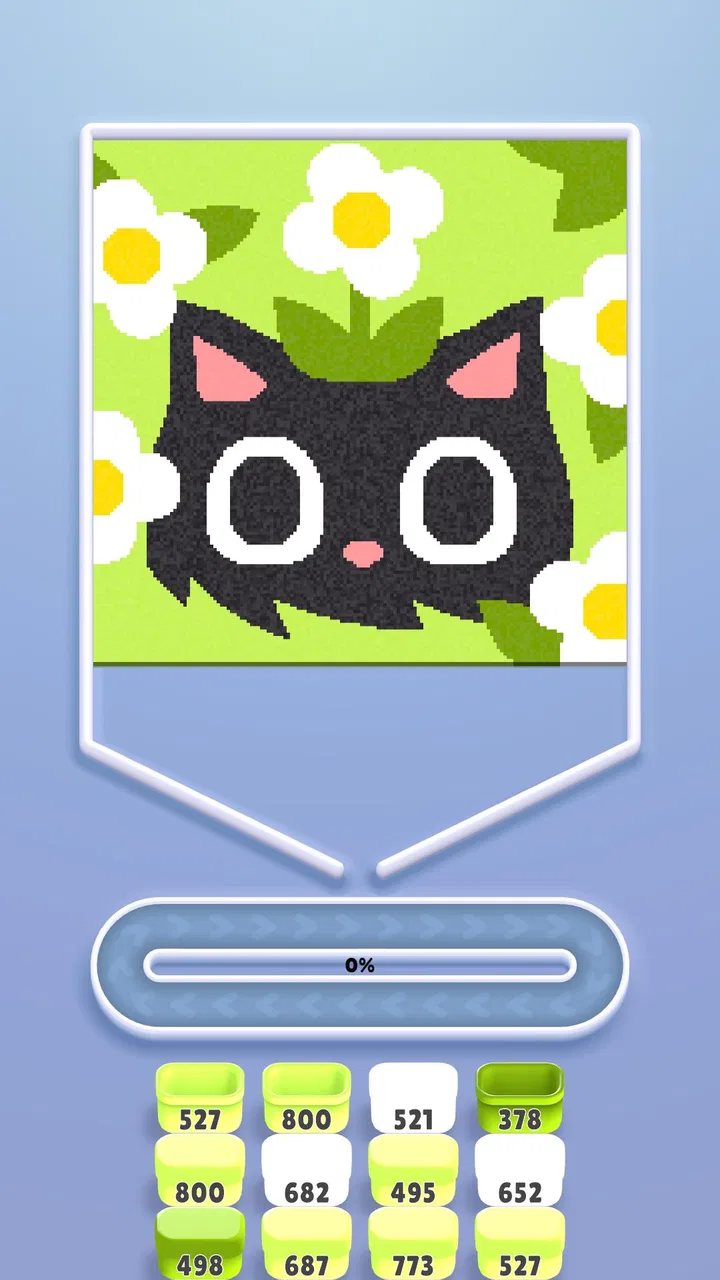
Sand Drop is the kind of puzzle game I open when I want something calm enough for a short break but still interactive. Its central idea is simple: colored sand falls, I swipe to influence it, and I try to solve the arrangement in front of me. That simplicity makes it easy to understand almost immediately, although it also means the game will appeal more to players who enjoy gentle repetition than to anyone looking for a deep campaign or a complicated rule set.
After spending time with it, I see the main decision as a question of mood rather than raw content. If you want a quiet, touch-focused puzzle that can fit into spare minutes, this game has a clear appeal. If you need a large variety of mechanics, a strong narrative, competitive features, or a long-term progression system, you should look more closely at other kinds of puzzle games before settling here.
What to consider before downloading
The first useful thing to know is that Sand Drop is a free game in the puzzle category, developed by Fingers Yoda. It is aimed at Everyone, so its colorful presentation and straightforward interaction are suitable for a broad audience. The game is available for devices running Android 7.0 or later, and the current version is 0.4.1. Those details make it a practical option for people using an older compatible phone rather than a recent flagship.
You May Also Like

 AccuWeather: Weather Radar
AccuWeather Review: A Quick, Clear Forecast for Everyday Decisions
For everyday plans, the best forecast is the one you can understand quickly. AccuWeather makes rain timing, radar, and local conditions easy to act on, with a few trade-offs.

 Hill Climb Racing
Why Hill Climb Racing Still Turns Crashes Into One More Run
A tiny car, a bumpy hill and one more upgrade: Hill Climb Racing keeps resurfacing because its simple chaos makes every near-miss feel personal.

 AliExpress - Shopping App
AliExpress Makes Global Shopping Feel Personal, but Shoppers Bear the Risk
AliExpress turns a global marketplace into a pocket-sized discovery engine. Its reach is useful, its shopping loop compelling, and its trade-offs easy to miss.

 Lords Mobile: Kingdom Wars
Lords Mobile Is a Kingdom-Building Routine, Not a Quick Match
A case-by-case verdict on the building, battles, device demands, and social commitments that make Lords Mobile rewarding for some players and exhausting for others.

 PDF Scanner app - TapScanner
TapScanner Makes Paperwork Easier to Capture, Check, and Share
TapScanner makes scanning with a phone feel less like a rescue operation and more like a dependable step in getting work done. Its capture tools are useful, though not flawless.

 Block Blast!
 Shows How Much a Puzzle Game Can Leave Out
A quiet grid game shows why puzzle players increasingly value instant clarity, repeatable skill and low-pressure play—and where the genre still needs to catch up.
More From Our News Desk
View All News


Its public reception is reasonably positive without suggesting universal agreement: the game holds a 3.8 average from around 80 ratings, with about 28 written reviews. I would read that as a sign of a small but interested audience, not as proof that every player will enjoy the same pace. It has also passed 10K+ installs, which gives it some early visibility while still placing it well below the huge puzzle titles most people already know.
The store presents it as free, but in-app purchases range from $0.99 to $99.99 per item. That range matters when deciding whether it belongs on a child’s device, a shared family phone, or a personal handset. I would treat the free download as an opportunity to test the basic experience, then check the purchase flow before handing the device to someone who may tap quickly through a difficult level or tempting option.
My decision criteria for this game would be simple. First, ask whether you enjoy manipulating a scene with swipes more than solving word clues, matching tiles, or planning several moves ahead. Second, consider how much variety you need after the first few play sessions. Finally, decide whether optional spending is acceptable in a free game. Those three questions tell you more than the colorful presentation alone.
Why the swipe-and-sand idea works
The strongest part of Sand Drop is its physical-feeling premise. Swiping colored sand gives the game an immediate connection between finger movement and what happens on screen. I do not need a long tutorial to understand the basic relationship between gesture and result. That low entry barrier is valuable when I am waiting for an appointment, taking a short break from work, or looking for something less demanding before bed.
There is also a pleasant contrast between the relaxed visual theme and the need to pay attention. The game may look soothing, but a successful solution still depends on observing where the sand is going and choosing a useful swipe instead of moving randomly. That balance gives the experience more purpose than a purely passive visual toy. I can play casually, yet I still feel involved in each attempt.
One practical tip is to slow down before making the first swipe. In a game built around falling material, the initial layout is information, not just decoration. I look for the spaces that appear most constrained and consider which movement could preserve room for later adjustments. Even when the puzzle is easy, this habit makes the interaction feel more deliberate and helps avoid wasting a move through impatience.
A second useful approach is to treat the edges of the play area as part of the solution. Players often focus on the colored sand itself and forget that available space controls what can happen next. I found that a swipe intended to fix one area can create a problem elsewhere if I do not think about the remaining room. Watching the overall shape rather than chasing one color at a time is a small but meaningful improvement in how the game feels.
Where this game is a better fit than familiar puzzle alternatives
Compared with match-three games, Sand Drop feels less dependent on scanning a packed grid for a high-value combination. The appeal is not the excitement of a chain reaction; it is the satisfaction of guiding a changing arrangement toward a solution. That makes it a better choice for someone who finds flashing effects and rapid matching tiring, but it may feel too quiet for players who want constant rewards and dramatic feedback.
It also occupies a different space from word puzzles. There is no need to search for vocabulary, remember trivia, or be comfortable with a particular language. The visual interaction does more of the communication. That can make it approachable for mixed-age households and for anyone who wants a puzzle that does not depend on reading ability. On the other hand, players who enjoy building a personal knowledge base through crosswords or word games may find less mental variety here.
Against classic logic games, the trade-off is equally clear. Sand Drop offers a more tactile experience than a traditional number or placement puzzle, so it can be easier to pick up while tired. A conventional logic title may provide more structured planning and a clearer sense of mastery, though. If your ideal session involves proving a solution through several carefully calculated steps, this game’s softer, gesture-led format may not provide enough depth.
It is also worth separating this game from physics sandboxes. The falling-sand concept may invite experimentation, but Sand Drop is presented as a puzzle rather than an open-ended construction tool. I would download it expecting guided problem solving, not an unlimited laboratory for making elaborate simulations. That distinction prevents a common mismatch between what the visual theme suggests and what a player actually wants.
Everyday situations where it makes sense
Imagine having seven minutes before a train arrives. A large story game may be awkward because you do not want to lose your place, while a competitive game may demand more concentration than the moment allows. Sand Drop suits that gap because the swipe interaction can be understood quickly and the visual goal keeps the session focused. I would use it in that situation when I wanted a small mental reset rather than a major gaming session.
It can also work as a shared, low-pressure game for a parent and child. One person can suggest where to swipe, while the other performs the gesture, turning a short puzzle into a conversation. The Everyone rating supports that broad positioning, but I would still keep an eye on in-app purchase access on a shared device. The game’s accessibility is a strength; it should not automatically mean unsupervised spending is appropriate.
For a tired evening, the subdued style may be more comfortable than a noisy arcade puzzle. I would not call it a guaranteed sleep aid, since any screen can keep someone engaged, but its basic interaction is less hectic than many alternatives. The best use is a short session with a clear stopping point, especially if you are trying to avoid getting pulled into a game designed around endless competition.
Another less obvious use is as a gentle introduction to touch-based problem solving. Someone who rarely plays mobile games may feel intimidated by virtual controls, timed challenges, or complex menus. A swipe-centered puzzle lowers that barrier. It gives a new player a chance to learn that small gestures can produce meaningful changes without requiring fast reflexes or a large collection of controls.
Where another puzzle category may serve you better
I would not choose Sand Drop for a player who needs a substantial narrative. The game’s appeal comes from the act of arranging and solving, not from following characters or uncovering a world. A story-driven puzzle adventure would be a better fit if emotional context, dialogue, and a sense of journey are what keep you playing.
It may also disappoint people who measure value by endless novelty. A focused mechanic can be satisfying, but focus creates limits as well as clarity. If you usually move between several puzzle types in one sitting, a collection game or a title built around word, number, spatial, and matching challenges may offer better variety. Sand Drop makes more sense when you enjoy returning to one central idea and improving your feel for it.
Players seeking competition should look elsewhere too. Nothing about the game’s core presentation makes it the obvious choice for leaderboards, direct multiplayer pressure, or social rivalry. A competitive puzzle alternative would better serve someone who needs scores, rankings, or an opponent to create motivation. Here, the reward is more personal: finding a satisfying solution through your own swipes.
Finally, people who dislike in-app purchase ranges in free games should make their choice carefully. The download costs nothing, but individual purchases extend from $0.99 to $99.99. That does not by itself make the game unsuitable, yet it changes the way I recommend installing it on a child’s or family device. If you want a completely predictable one-time cost, a paid puzzle game with no purchase prompts may be a more comfortable alternative.
The real cost of switching from another puzzle game
Moving from a familiar puzzle game to Sand Drop is not difficult in terms of controls. The larger adjustment is mental. Match-three players may need to stop looking for immediate combinations, while logic-puzzle players may need to accept a more tactile and less formal style of reasoning. I would give it several short sessions rather than judging it after a few swipes, because the pleasure comes from learning how the sand responds to deliberate movement.
There is also a habit cost. Many mobile puzzle games train players to chase daily rewards, streaks, or increasingly elaborate upgrades. Sand Drop’s focused premise may feel refreshing if you are tired of that structure, but it can feel sparse if those systems are the reason you open a game every day. Before switching, decide whether you want a calmer activity or whether you are actually looking for more progression. Installing this title will not solve the second need simply because it is colorful and easy to start.
Storage and device compatibility are relatively straightforward considerations. Because the minimum requirement is Android 7.0, owners of older supported devices have a chance to try it without upgrading solely for this game. I would still keep the current version, 0.4.1, in mind when troubleshooting: if something feels unusual, checking that the app is updated is a sensible first step before blaming the phone or the control method.
Switching is easiest when you use the game for the role it handles best. I would not replace every puzzle app with it. Instead, I would keep a more demanding logic title for focused sessions, a word game for language practice, and Sand Drop for short tactile breaks. That combination respects its strengths instead of forcing it to compete in areas where another category naturally has more depth.
Small techniques that improve the experience
My most useful technique is to separate observation from action. I first identify the target arrangement, then make one intentional swipe and watch the result before planning again. Rapid gestures may feel productive, but they can hide why a solution worked or failed. Slowing down turns each attempt into feedback, which is especially helpful for players who initially think the game is based on luck.
I also recommend using the smallest effective movement whenever the layout allows it. A broad swipe can influence more of the scene than intended, while a controlled gesture lets me correct one area without disturbing another. This is not about playing cautiously for its own sake; it is about preserving options. The more room I leave for a later correction, the less likely I am to create a chain of problems from one hurried move.
When a puzzle seems stuck, I change my viewpoint rather than repeating the same gesture. I ask whether I am trying to place a color too early, blocking a route that another part needs, or treating an open area as irrelevant. That reset is more useful than simply swiping harder or faster. It also reveals the game’s main learning curve: success comes from understanding relationships between spaces, not from mastering complicated controls.
For short sessions, I would stop after a satisfying solve instead of turning the game into a forced marathon. This kind of puzzle works well as a palate cleanser precisely because it does not need to dominate the entire evening. If the experience starts feeling repetitive, that is a signal to switch categories, not necessarily evidence that the individual puzzle has failed. The game is strongest when its compact idea matches the length and mood of the session.
My recommendation for different kinds of players
I recommend Sand Drop to anyone who wants a free, approachable puzzle built around colored sand and swiping rather than words, numbers, or rapid matching. It is especially suitable for casual players, families looking for a simple shared activity, and people who enjoy visual problem solving in short bursts. The Everyone rating and Android 7.0 minimum make it broadly accessible, while the early audience of over 10K+ installs suggests it is easy enough to discover without being an established giant.
I would be more cautious with players who need a large amount of content, a story, competitive pressure, or a completely purchase-free environment. The free entry point is useful, but the presence of purchases from $0.99 to $99.99 means I would review device controls before letting a child play independently. Those are not minor details; they directly affect whether the game feels comfortable in your household.
Fingers Yoda has chosen a clear direction instead of trying to combine every puzzle trend in one package. In my experience, that focus is both the reason to download and the reason some players will move on. The tactile sand concept gives short breaks a distinctive rhythm, but it cannot replace a deep strategy game or a varied puzzle collection for everyone.
My final view is positive but specific: Sand Drop is worth trying when you want a calm, gesture-led puzzle rather than a complete mobile gaming hobby. Start with a few short sessions, use deliberate swipes, and decide whether the focused mechanic holds your attention before considering any purchase. If that style clicks with you, the game can become a pleasant little reset in the day. If you want narrative, competition, or broader puzzle variety, choose an alternative built around those priorities instead.
FAQs for Sand Drop
01What is Sand Drop and how does the game work?
Sand Drop is a casual puzzle game built around guiding falling grains of sand into the correct containers or target areas. As you progress, levels usually introduce obstacles, moving parts, color-based mechanics, and tighter spaces that require more careful planning. The controls are easy to understand, but completing later stages can require patience, timing, and experimenting with different routes.
02Is Sand Drop free to download and play?
Sand Drop can generally be downloaded at no initial cost, allowing players to try its core levels without purchasing the game upfront. However, the experience may include advertising, optional in-app purchases, or paid features such as hints, extra attempts, cosmetic elements, or an ad-free option. Before downloading, check the store listing for the current pricing, payment details, and any platform-specific restrictions.
03Does Sand Drop require an internet connection?
Many levels in Sand Drop can typically be played offline once the application has been installed, which makes it suitable for short sessions while travelling or when mobile data is unavailable. Nevertheless, an internet connection may be needed for advertisements, purchases, cloud features, analytics, updates, or restoring progress. Offline availability can vary by version, device, and the developer’s current implementation.
04Is Sand Drop suitable for children and casual players?
Sand Drop is designed to be approachable, with simple interactions and puzzle rules that can usually be learned quickly. It may be suitable for children and casual players, but parents should still review the age rating, advertising content, and in-app purchase settings before allowing unsupervised play. Some later puzzles may also become challenging, so younger players could need occasional help.
05Are there many levels in Sand Drop, and does the game become repetitive?
The main appeal of Sand Drop comes from solving a sequence of short physics-based or logic-focused challenges rather than following a long story. Early levels generally introduce the mechanics gradually, while later stages add more obstacles and require improved planning. The amount of available content depends on the installed version, and players who prefer fast, varied action may eventually find the basic gameplay repetitive.
Pros
- Simple drag-and-drop controls are easy to learn.
- Relaxing gameplay suits short breaks and casual sessions.
- Colorful visuals make the falling sand easy to follow.
- Physics-based interactions create varied results each round.
- Lightweight design should run well on many devices.
Cons
- Gameplay may feel repetitive after extended sessions.
- Limited depth may not satisfy players seeking complex challenges.
- Small objects can be difficult to control on compact screens.
- Progression and replay value may feel modest over time.
- Some features may require ads or in-app purchases.

Sand Drop
Gallery